
Executive summary
Seadrill's Rig Innovation & Technology team built one containerized architecture for the whole fleet and manages it from one place. Portainer deploys and configures the software, Cedalo's Mosquitto brokers carry the data, and WAGO hardware sits at the edge. Template-based deployment cuts rollout to minutes per vessel, against the 6-18 months a conventional approach takes.
Download the case study (PDF) with all the technical diagrams
At a glance
| Customer | Seadrill, global offshore drilling contractor |
|---|---|
| Industry | Oil & Gas, offshore drilling |
| Fleet | 13 rigs across the Gulf of Mexico, Brazil, Norway, Malaysia, and West Africa |
| Platform | Metis, Seadrill's internally built data availability platform |
| Technology | Portainer Business Edition, Cedalo Pro Mosquitto, WAGO edge hardware, Node-RED, InfluxDB, Azure |
| First deployment | West Saturn, Brazil, April 2025 |
| Results | Under $70,000 prototype cost, rollout in minutes per vessel, data continuity through outages of up to seven days |
Business overview
Seadrill is a global offshore drilling contractor with a modern fleet of 13 rigs operating across the Gulf of Mexico, Brazil, Norway, Malaysia, and West Africa. Supported by approximately 3,500 employees and $1.38 billion in revenue, Seadrill combines experienced crews, advanced technologies, and a strong operational focus to deliver safe, efficient, and responsible drilling services for national, integrated, and independent oil companies.
Safe and efficient offshore drilling relies on a complex network of systems, sensors, and subsystems operating together around the clock. Across Seadrill's fleet, those systems generate high volumes of operational data every day. Making that data reliable, accessible, and actionable in real time is essential to improving operational visibility, supporting faster decision-making, and strengthening performance across the fleet.
To support the continued evolution of that performance, Seadrill's Rig Innovation & Technology team was established to continuously evaluate new technologies and internal innovation across the fleet. With a remit to advance existing technologies, support a more sustainable future for the offshore industry, and develop cost-effective solutions to legacy challenges, the team set out to find a more efficient way to expand operational data capture, add measurement points, and enable pre-transmission data sharing with the company's Rig Innovation Center and third-party monitoring systems.
The team identified strategic limitations in existing OEM data solutions and, aware of the impact on operational efficiency and growth, decided to build a better solution using off-the-shelf hardware and software to simplify data integration, cut costs, and improve flexibility and scalability.
Results that matter
The real-world impact of smarter container management.
Challenges
Seadrill's operations team faced a challenge familiar to anyone managing critical infrastructure on a global scale: the vendors that built its equipment also controlled the data, creating operational inefficiencies and posing a long-term risk to scalability, control, and cost management.
Seadrill emphasized that its offshore personnel were maintainers, not engineers. Therefore, any system that required advanced coding skills was not viable. The team needed a workflow as simple as: plug in, configure, publish.
The Oil & Gas sector's structural insularity, both in available technical expertise and in the vendor landscape that serves it, creates conditions where even routine integrations carry extraordinary price tags. The Rig Innovation team ran headfirst into this.
- Locked in: Legacy OEM-supplied systems offered limited extensibility and deep vendor lock-in. Adding a single measurement point that already existed in the system but was not being aggregated resulted in a $22,000 software change request. Integrating six flow meters into a legacy control system on one vessel was quoted at a minimum of $300,000 by major OEM vendors, not including field work.
- Costly by design: The alternative was not much better. The closest system integrator quote for a comparable solution came in at more than $150,000 per rig, without installation and commissioning. Adding a new measurement point required navigating complex licensing, custom engineering, and sometimes paying both a capital fee and an ongoing subscription for basic data access.
- Slow to adapt: The existing architecture made prototyping new monitoring solutions expensive and time-consuming. A conventional deployment, from initial scoping to a live data stream, could take 6-18 months per vessel, limiting the Rig Innovation team's ability to quickly respond to operational needs.
- Connectivity-hostile environment: Offshore rigs' connectivity is inherently unreliable, making local data processing and buffering during outages essential to avoid data gaps. The Seadrill team has experienced data gaps lasting up to seven days, making any architecture that depended on continuous connectivity not viable.
- No repeatability: With 13 rigs operating worldwide, there was no standardized architecture. Each new deployment was its own project.
"Historically, our industry has had to deal with large hurdles to add data availability; be it systems that are complex, costly or even proprietary in nature – these systems suffer from limited extensibility, inflated implementation costs, overpriced hardware, and lifecycle management & obsolescence challenges," said Chris Bivens, Seadrill Technical Manager. "Seadrill aims to significantly reduce upfront costs, simplify system maintenance, and provide a flexible platform for future innovations in offshore data availability expansion."
The solution
Working with Cedalo and Portainer, and using WAGO edge hardware at the rig level, Seadrill's Rig Innovation & Technology team developed Metis: an internally built data availability platform based on open standards and containerized software. The ambition was not only to reduce costs, but to create a faster, more scalable way to expand operational data capture, add new measurement points, and share data before transmission — removing structural delays from the delivery chain and making future deployments simpler and more repeatable.
Software complexity and data transport were solved at the architecture level, leaving a simple, practical question for each new deployment: what hardware is necessary and who will install it? Once built and standardized through Portainer, the software stack could be deployed anywhere without reconfiguration. It would automatically detect connected devices and start pulling data. The only work left at the cloud level would be deciding how to use that data.
The project moved faster than most would expect for offshore infrastructure. What began as informal capability discussions with Portainer in early 2024 quickly developed into a greenlit proof of concept. Portainer introduced Cedalo to support the MQTT layer, building on Seadrill's existing use of open-source Mosquitto and providing a path to Cedalo's Pro edition. From there, the team moved through internal testing, architecture refinement, and a focused round of efficiency and repeatability improvements before the stack was configured and ready for deployment.
How it works
Hardware was installed and connected on West Saturn in Brazil by April 2025.
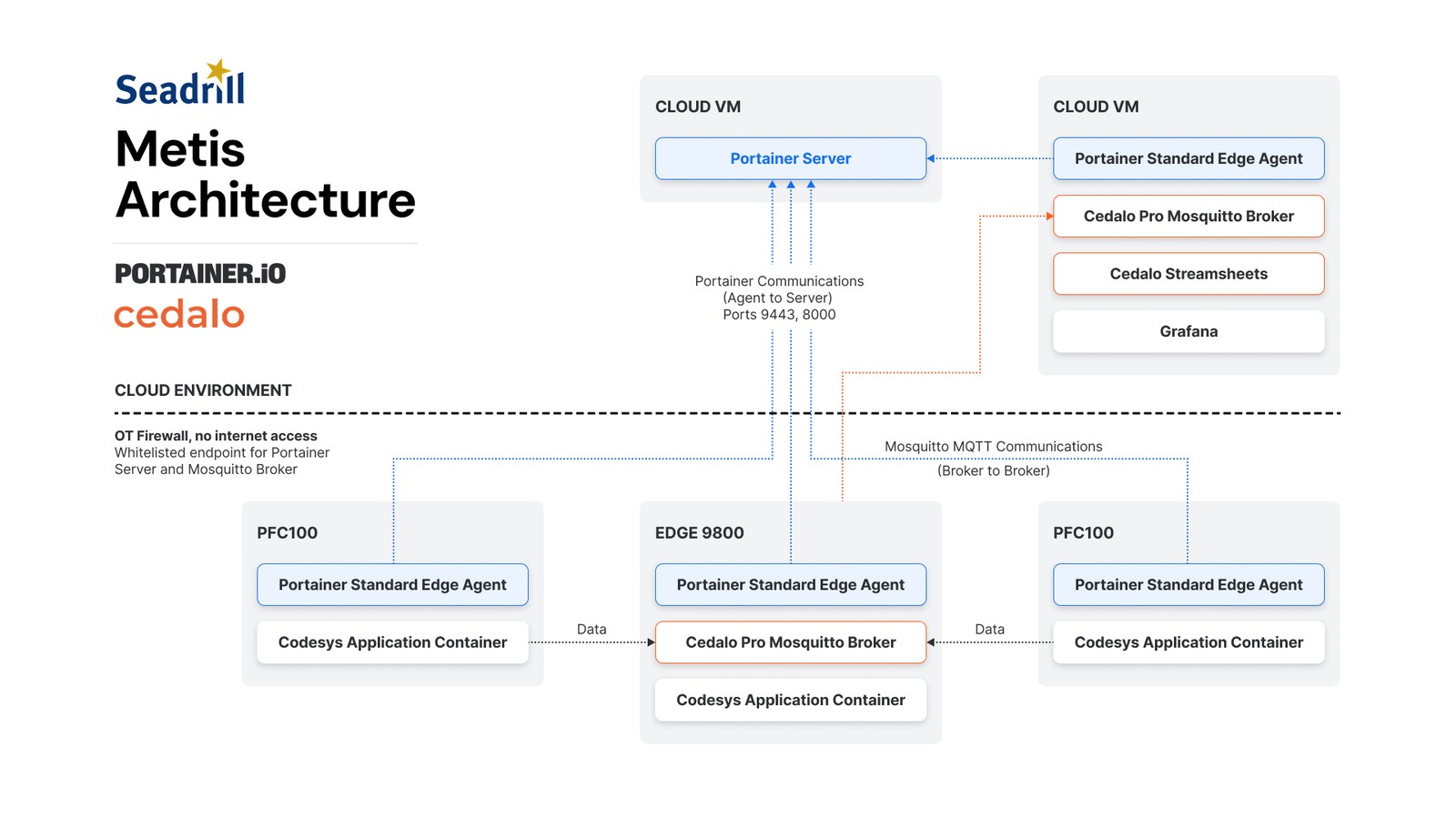
The system architecture consists of two interconnected layers with proven open-source foundations, enterprise-grade versions, and no proprietary lock-in.
Cedalo Pro Mosquitto collects and manages millions of telemetry points daily from sensors and systems on each rig, reliably brokering data over MQTT with up to seven days of local storage during connectivity outages.
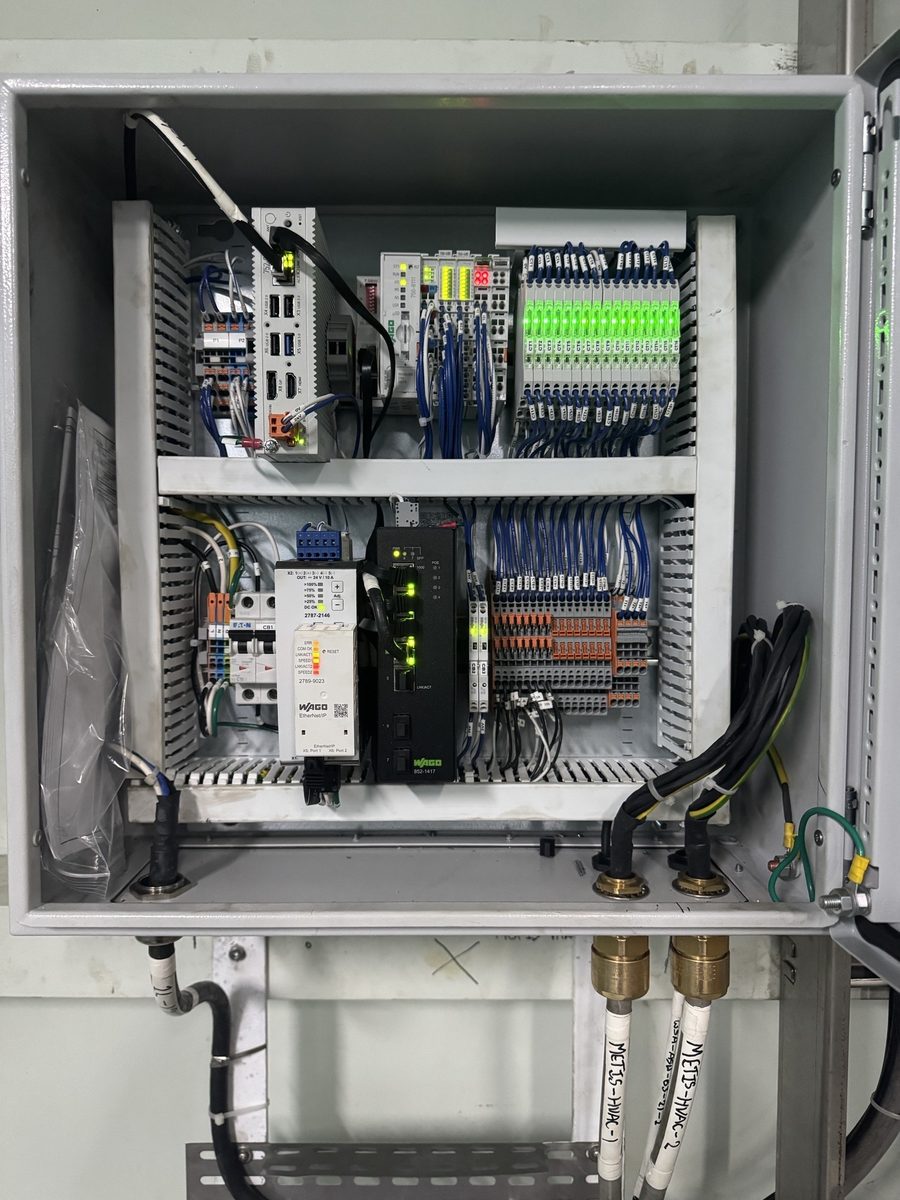
Portainer centralizes deployment and configuration of the containerized software stack to ensure consistent configurations are pushed to every vessel in the fleet without the need for an on-site engineer, directly supporting scalability and cost control.
Offshore broker instances run independently when links drop and automatically sync to the onshore cloud broker when connectivity is restored. Portainer's edge agent operates asynchronously, is purpose-built for intermittent and high-latency connections, and pre-pulls container images for offline deployment, retrying as needed.
The result is a system where any stakeholder, from an onshore analyst or offshore engineer to a maintenance technician, can add a new data point without engaging a vendor.
Key capabilities
"From Seadrill's perspective, Portainer and Cedalo gave us a practical combination of centralized edge management and resilient offshore data delivery," explained Bivens. "That allows us to manage a global fleet consistently while protecting data continuity even through potential high-latency and intermittent connections. By building Metis from proven, off-the-shelf technologies, we also retain the flexibility to integrate best-of-breed components without locking the platform to a single vendor."
Fleetwide Orchestration: Central deployment and management of all containerized workloads across cloud infrastructure and offshore assets from a single control plane via Portainer Business Edition. An edge agent installed on each vessel enables secure, outbound-only communication back to the central environment hosted on Azure. The Metis portal itself runs as a container managed by Portainer, alongside Cedalo's Management Center. Template-based deployments transfer all dependency files directly to edge devices, enabling standardized rollouts across the fleet without rig crew involvement.
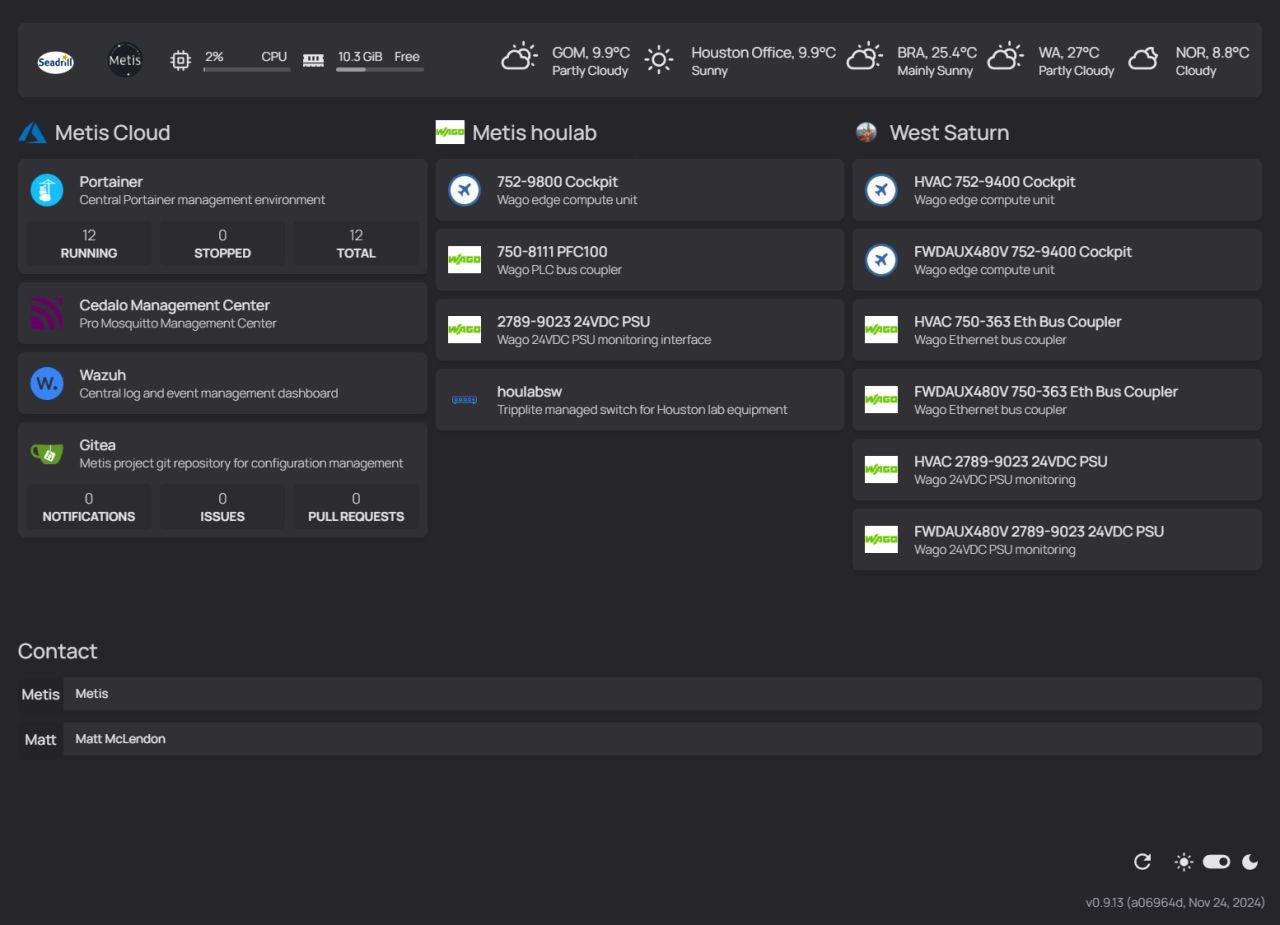
Data Backbone: Enterprise MQTT data processing for high volumes of telemetry data daily across the fleet via Cedalo Pro Mosquitto. Offshore and onshore broker instances are bridged: the offshore instance operates independently when connectivity is lost and syncs automatically with the onshore cloud instance when the link restores. The result is continuous data availability regardless of satellite link status. Cedalo's Management Center provides observability, health stats, and client activity tracking across all broker instances.
Supporting stack: Node-RED for integration and metric generation, InfluxDB for local time-series storage. All workloads run as containers, deployed and managed centrally by Portainer.
Open Standards Architecture: The containerized software stack runs independently of the underlying edge hardware, giving Seadrill full flexibility as the platform scales. As the deployment expands to different hardware on the West Neptune, the software stack requires no reconfiguration, the architecture travels as-is.
The results
"Metis has changed the conversation from 'How do we get this data?' to 'What can we do with it?'," Bivens explained. "Previously, introducing a new source of operational data often required a bespoke engineering effort involving multiple vendors, specialist support, and offshore resources. Metis gives us a standardized and repeatable way to deploy and manage those integrations remotely, significantly reducing the time, cost, and complexity involved."
The Metis prototype, deployed on the West Saturn, proved out the architecture with a cost under $70,000 for the hardware, field installation personnel, Cedalo Pro Mosquitto for the vessel's brokers, and a Portainer Business Edition license covering the full fleet for the coming years.
- Costs more than halved: The total prototype spend was under $70,000, compared to $150,000+ per vessel for the next-best alternative from a system integrator and less than a quarter of the $300,000+ quoted through OEM channels for the same sensor integration work.
- Deployment in minutes, not months: Template-based deployment with Portainer reduces rollout time to minutes per vessel, compared to the 6-18 month timeline a conventional approach would require.
- Offline resilience: Continuous data flow maintained through connectivity outages of up to seven days with automatic reconciliation when links are restored.
- Field adoption: Immediate acceptance by offshore maintenance teams with minimal training required.
- Real operational impact: Metis data enabled accurate emissions reporting for the first time. Standard marine diesel emission calculations had not accounted for Seadrill's fuel purification process, which delivers a measurable efficiency gain. Using actual instrumentation data, Seadrill can now report an improvement of more than 10% over the standard calculation, a figure directly tied to customer requirements.
- Self-service data access: Any stakeholder can now add a new sensor and get data flowing in real time without specialist or vendor engagement required.
- Foundation for fleet expansion: The architecture was designed to scale, with every vessel in the operational fleet of 13 aiming to receive the standard edge compute footprint targeting 100-plus measurement points per vessel, with a long-term goal of a fleet-average cost below $500 per measurement point aggregated onshore.
"Just the process of putting a field rep on board a ship, it could take weeks to months before the data is live and streaming," said Portainer Product Steward Matt McLendon. "So, if nothing else, hitting a button and being able to deploy and have a live data stream in minutes is industry-breaking."
Next steps
With the architecture proven on the West Saturn, Seadrill's Rig Innovation team is now progressing to the next deployment on the West Neptune, with a focus on flow-measurement instrumentation that will provide a more granular, instrumentation-led view of fuel consumption. This will complement established industry calculation methods and give the fleet a stronger data foundation for future emissions reporting, performance analysis, and customer-facing insight.
Future plans extend to broader energy consumption measurement across vessel systems, the integration of wireless sensors into hard-to-reach areas, automation of the CI/CD pipeline, and expansion of data provisioning to third-party analytics platforms. The platform was designed not just to solve today's data challenges, but to make the next solution a matter of hours, not months.
"The result is faster access to reliable operational data and a platform that allows our teams to respond to new measurement and analysis needs much more quickly," Bivens concluded.
"Seadrill is a blueprint for industrial operators trying to escape OEM data lock-in and build a best-of-breed architecture," added Philipp Struss, CEO at Cedalo. "The pattern — a Mosquitto-based MQTT backbone at every site, orchestrated and rolled out through Portainer — works the same way for a fleet of offshore rigs as it does for a network of factories or data centers. That's why this deployment matters beyond Oil & Gas."
Whether you're managing at scale or building at the edge, we're here to make it simple.